 Posted on 22 August 2026 - Author ( Lilan Dayananda)
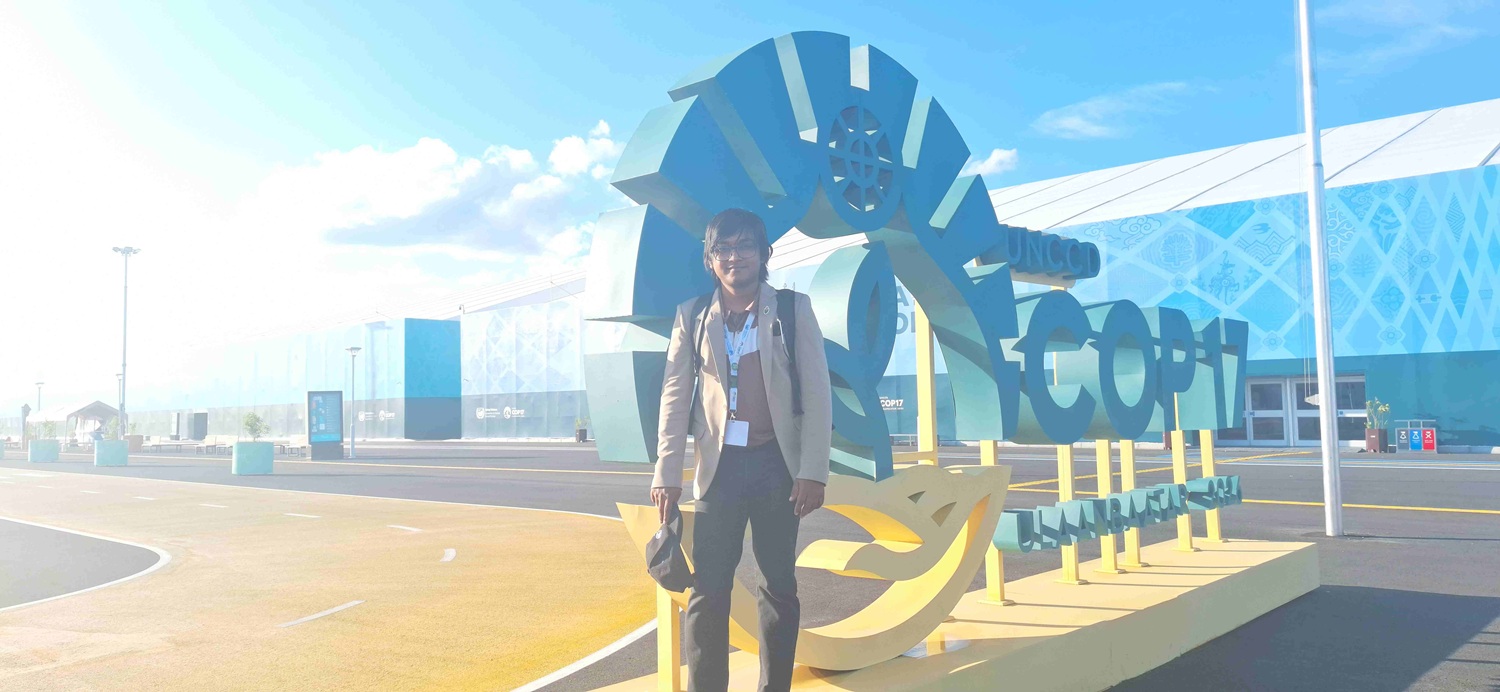
One of the most valuable things about attending a global conference is the opportunity to step away from the language of declarations and listen to people who are actually working on the ground. That was the central feeling I carried through my third day at UNCCD COP17.
The “From the Ground Up: Frontline Voices on Land Restoration” session brought attention to the people and communities experiencing land degradation directly and working to restore their landscapes. Their experiences are a reminder that restoration is not an abstract environmental ambition. It is connected to livelihoods, food security, resilience and the ability of communities to remain connected to their land.
Coming from Sri Lanka and working with agricultural communities, I found this particularly meaningful. Technology can provide information. Science can provide evidence. Policy can create enabling conditions. Finance can help scale solutions. But implementation ultimately happens in places where people live and work. That is why frontline knowledge matters.
The Restoration Economy Roundtable continued the discussion around finance and the business case for restoration. A recurring question throughout COP17 has been how to move from promising individual projects to approaches that can operate at meaningful scale. For young entrepreneurs, this is especially important.
If restoration is to become a lasting economic activity, we need business models that create environmental value while also creating opportunities for communities. Young people need pathways to build enterprises that restore ecosystems rather than simply extract value from them. Another powerful conversation of the day was “The Next Fire Won’t Wait: Turning Knowledge, Technology and Community Action into Resilience.”
The title itself captured an important reality: environmental risks do not wait for policy cycles. Wildfires, droughts, land degradation and other pressures can move faster than institutions.
The session explored how technology and traditional knowledge can work together to strengthen prevention and resilience. I found this intersection particularly important. Too often, technology and traditional knowledge are discussed as separate systems. In reality, combining them can create approaches that are both innovative and locally relevant.
The conversation “From Challenge to Change: The Business of Land Restoration” brought us back to entrepreneurship and investment. For me, this is where climate and land restoration become deeply connected to economic opportunity. Environmental challenges are often described only as problems. Yet they can also become spaces for innovation, entrepreneurship and decent livelihoods when solutions are designed responsibly.
The Inner Dimension of the Restoration Industry offered a different kind of conversation, focusing on values, purpose, leadership and our relationship with nature. It reminded me that restoration is not only technical. Why people restore land matters. What motivates them matters. How communities understand their relationship with nature matters.
The day concluded with the screening of “Before More Is Lost,” highlighting Indigenous knowledge and food sovereignty. I left COP17 that evening thinking about one phrase; restoration must begin from the ground up. Global targets can set direction. International institutions can create frameworks. But lasting restoration will ultimately depend on people, communities, knowledge and enterprises turning ambition into everyday action. Sometimes, to understand the future of land restoration, we simply need to listen to those already building it.