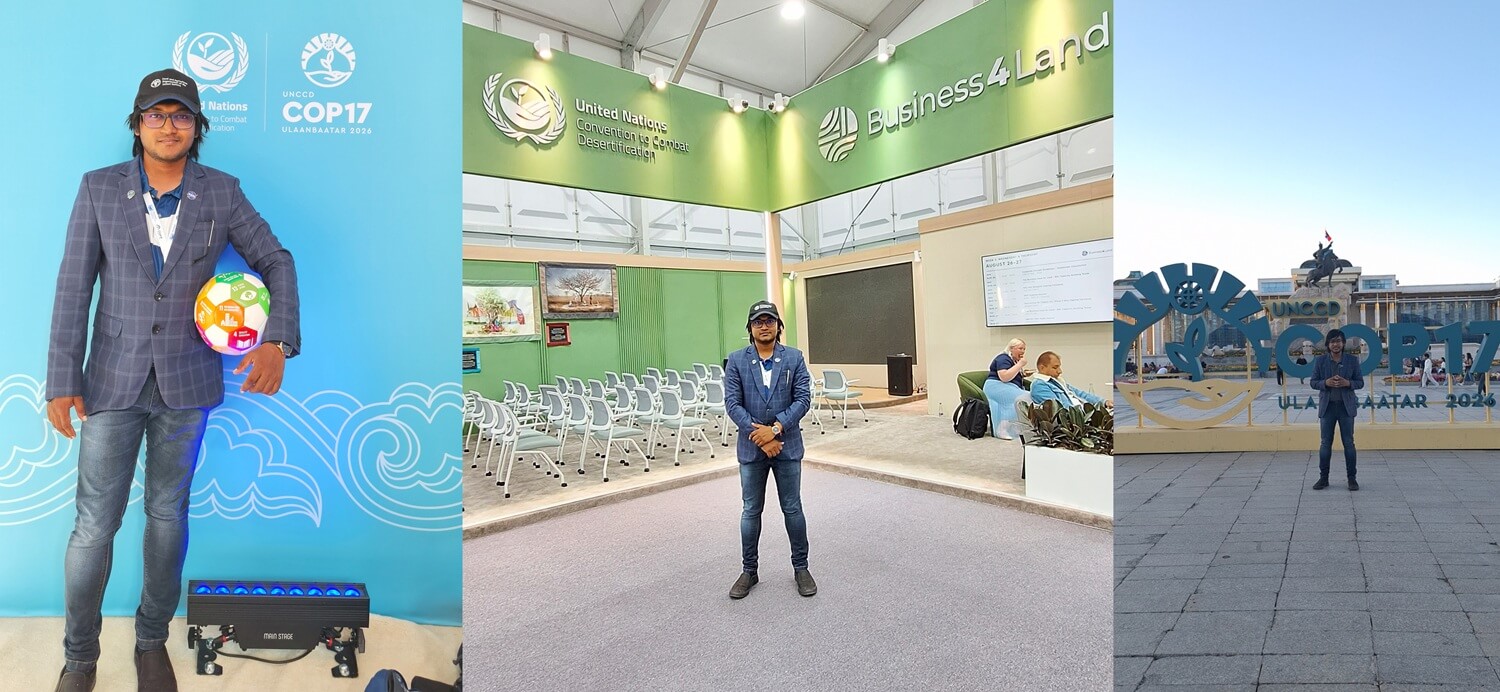
 Posted on 27 August 2026 - Author ( Lilan Dayananda)
As UNCCD COP17 moves towards its conclusion, the conversation today brought me particularly close to an issue at the centre of my own work: soil. The session “Living Soils, Productive Lands: From Policy to Implementation” focused on translating COP decisions into practical implementation and introduced tools and guidelines designed to support agricultural restoration at scale.
For me, this conversation was deeply relevant. Working at the intersection of agriculture, technology and climate action has taught me that farmers do not experience “land degradation” as an abstract concept. They experience declining productivity. They experience water challenges. They experience increasing production costs. They experience uncertainty about what to plant, when to plant and how to manage limited resources. And beneath many of these challenges is the health of the soil.
Healthy soil is often invisible beneath our feet, yet it is fundamental to productive agriculture, resilient food systems and functioning ecosystems. The discussion around land mapping and practical tools was therefore particularly interesting. Data can help us understand landscapes better, identify where intervention is needed and support more informed decisions. But technology must ultimately serve people.
A sophisticated mapping tool is valuable only when the information it produces can contribute to better decisions by farmers, communities, planners and policymakers. This was also reflected in the Global Flagship Initiative for Food Security, which highlighted the role of science, innovation and partnerships in strengthening food security. Land restoration and food security cannot be treated as separate agendas. The food we eat begins with landscapes. The resilience of those landscapes influences agricultural productivity, livelihoods and the stability of food systems.
Later, the discussion “From COP16 to COP17: Advancing Food Security Through Strategic Partnerships and Co-Investment” brought attention to another essential component: investment. Restoration requires resources. Communities need access to finance and knowledge. Entrepreneurs need pathways to scale. Researchers need opportunities to move ideas into practice. Governments need the capacity to implement policies. No single institution can provide all of these. That is why partnerships matter.
The Parliamentary Roundtable on Rio Synergies and Diplomacy further connected land degradation with climate change and biodiversity loss, emphasizing the importance of coherent policies, aligned budgets and accountability.
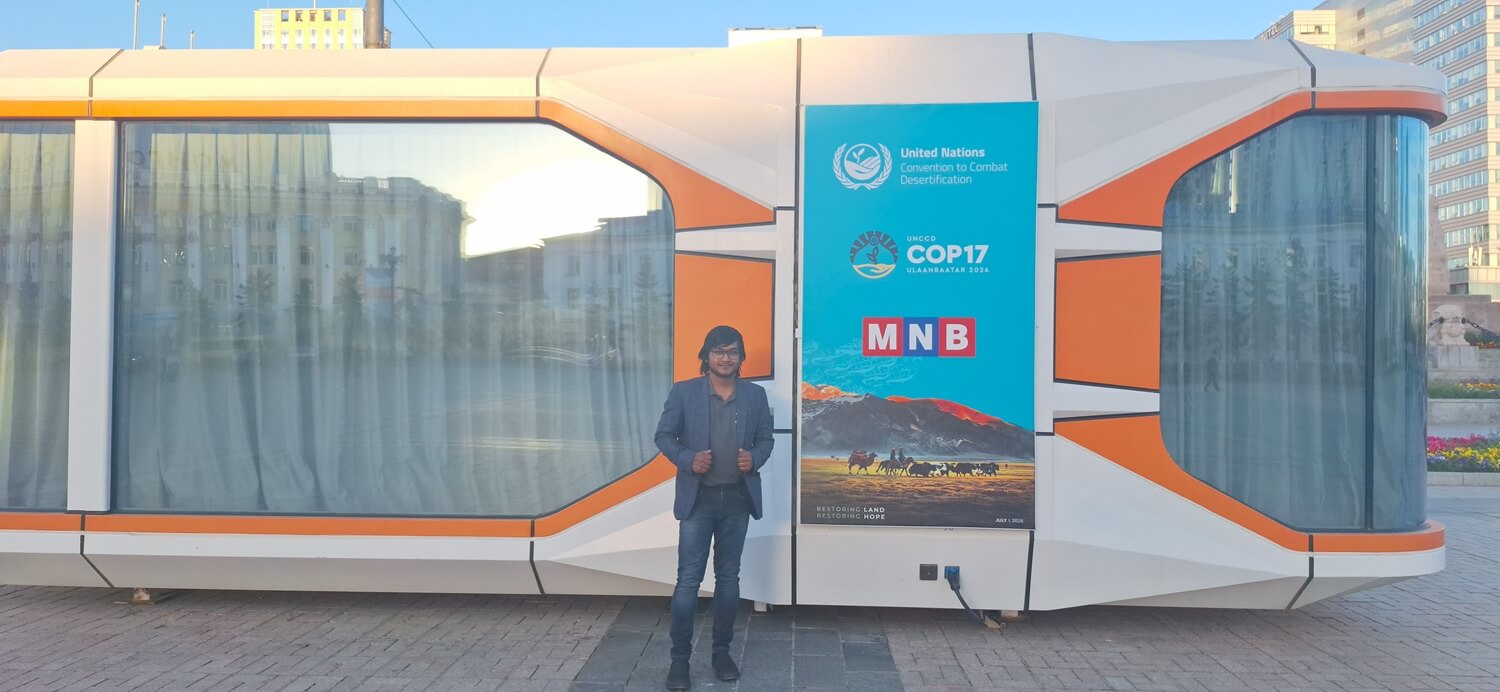
Another session on soil health and land restoration for food systems resilience reinforced the same message from a different direction. The conversations may have taken place in different rooms, with different speakers and different institutions, but a common thread connected them: Healthy land is an investment in human resilience.
As someone from the Global South, I think this conversation is especially important. Smallholder farmers and rural communities often have the least influence over global environmental decisions while experiencing some of their consequences directly. The challenge is therefore not simply to develop better technologies or stronger policies. It is to make sure those tools and policies reach the people who need them.
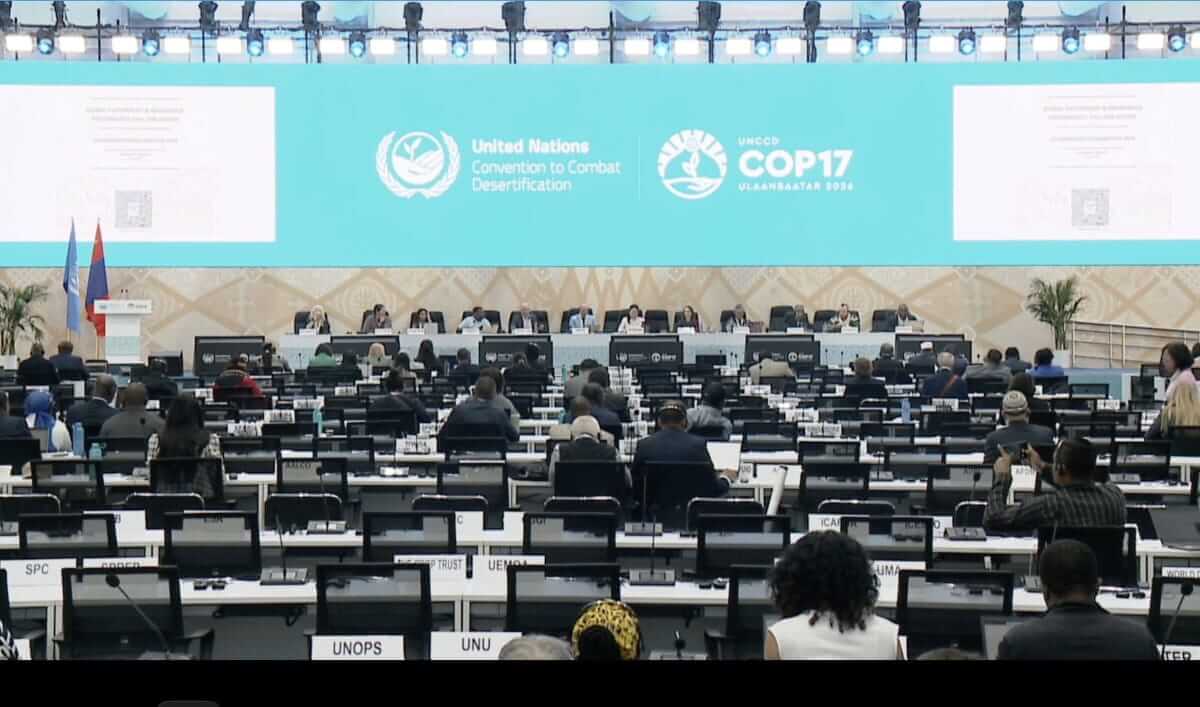
After days of conversations, meetings, side events, field experiences and policy discussions, UNCCD COP17 reached its final day in Ulaanbaatar. The conference moved into the formal process of adopting decisions and the conference report, followed by the Closing Plenary, where the UNCCD Secretariat, the COP17 Presidency, regional groups and civil society representatives reflected on the outcomes of the session.
There is something unique about the final day of an international conference. For nearly two weeks, the venue has been filled with conversations about land degradation, desertification, drought, restoration, finance, technology, food security and resilience.
Then suddenly, the question changes. It is no longer simply, what should we do? ; it becomes, what happens next? ; the closing discussions focused on the implementation pathway for the outcomes of COP17. For me, that word implementation has been one of the strongest themes of this entire journey.
During my time here, I have heard discussions about restoration achievements, frontline communities, youth entrepreneurship, finance, legislation, mining, Indigenous knowledge, ecological restoration, soil health, food security and Rio Synergies. At first, these may appear to be separate conversations. But after following them across the conference, I see them as parts of the same story.
Land restoration requires science. It requires finance. It requires policy. It requires technology. It requires businesses and entrepreneurs. It requires community knowledge. It requires farmers, pastoralists, Indigenous peoples and local communities. And it requires young people who are willing to build careers around solutions.
As a Youth Ecopreneur and someone working through Elzian Agro at the intersection of technology, agriculture, climate action and social impact, I arrived in Mongolia looking for stories. I found many. Some were told on formal stages. Others emerged in side events, workshops, informal conversations and exchanges between people from completely different parts of the world. That has perhaps been the most valuable part of this experience.
Global conferences can sometimes feel distant from everyday life. But when you listen carefully, the connections become clear. A decision negotiated in a conference room can influence a policy. A policy can influence an investment. An investment can support an enterprise. An enterprise can develop a technology. That technology can reach a farmer. And that farmer can change how a piece of land is managed.
The journey from a global decision to a local landscape may be long, but it is possible. That is why the closing of COP17 does not feel like the end of the story. It feels like a transition. The conference now leaves Ulaanbaatar, but the responsibility to implement its ambitions travels with everyone who participated.
For me personally, this journey has also strengthened my belief that reporting on global environmental processes should not stop at the negotiation table. We need to tell the stories of the people who implement decisions, adapt solutions, restore landscapes and create new possibilities. We need to listen across generations.
And we need to ensure that voices from the Global South and from communities working closest to the land are part of the wider conversation. I came to Mongolia to report on COP17. I leave with a much longer list of questions, stories, relationships and ideas to explore. Perhaps that is what a meaningful conference should do. It should not give us the feeling that the work is finished. It should remind us that the real work begins when we go home. From Ulaanbaatar, this is Lilan Dayananda, signing off from COP17 but not from the work of restoring our shared future.